
Wetsuit Thickness Guide: What to Wear by Water Temperature
Spring suit, 3/2, 4/3 or 5/4? A simple chart to match your wetsuit thickness to the water temperature, plus the fit and accessories that keep you warm.
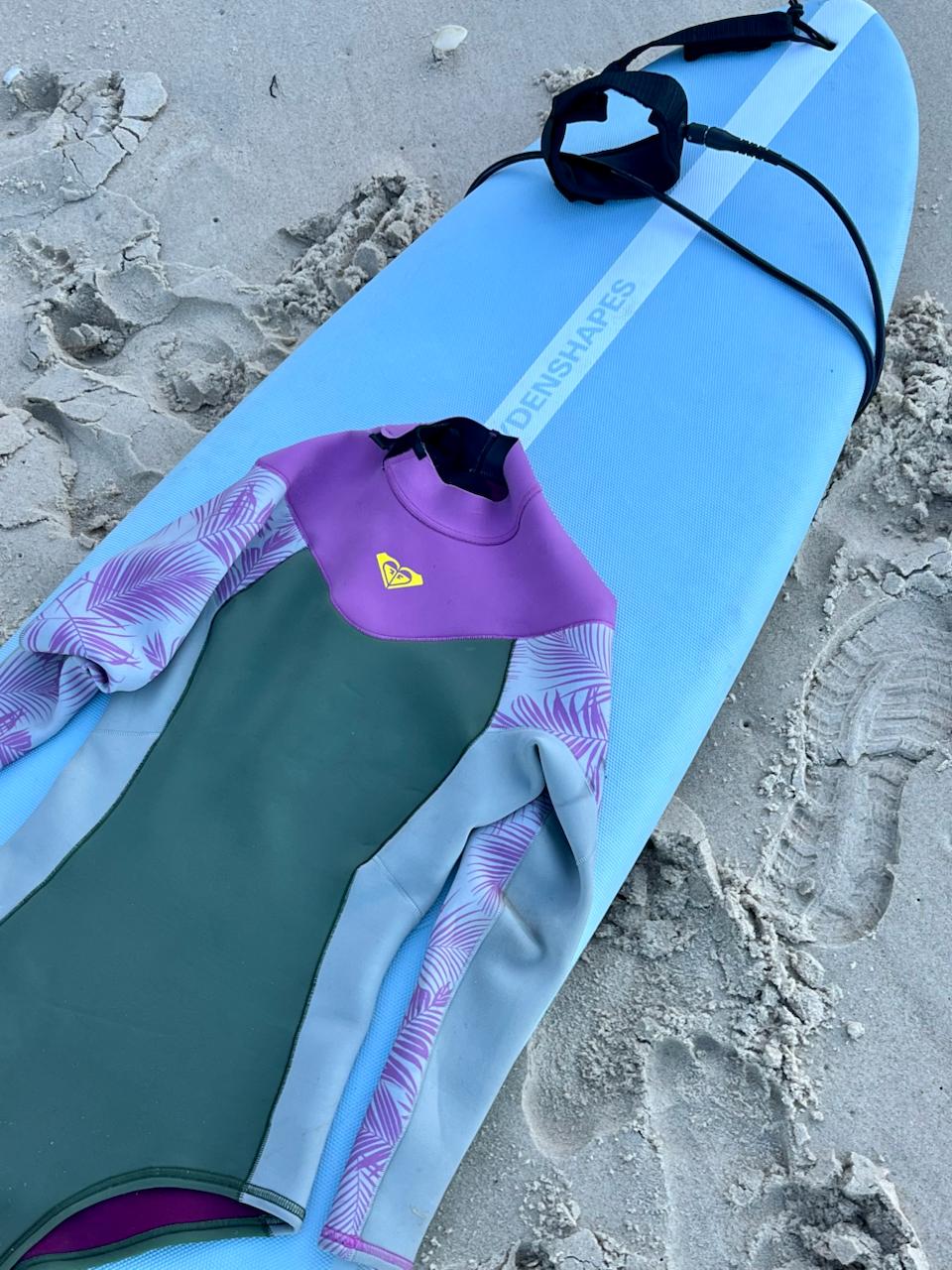
To match your wetsuit to the water temperature, use these benchmarks: above 77°F (25°C), boardshorts or a swimsuit and a rash guard are enough; around 68 to 77°F (20 to 25°C), a 3/2 full suit; around 59 to 68°F (15 to 20°C), a 4/3. Then adjust for how easily you get cold, the wind and how long you stay out.
What 3/2, 4/3 and 5/4 actually mean
The two numbers are the neoprene thickness in millimeters. The first one is for the chest and back, where you need to keep heat in. The second one is for the arms and legs, thinner so you can still paddle freely.
So a 4/3 is 4 mm on the torso and 3 mm on the limbs. Sometimes you will see three numbers, like 5/4/3, meaning three different thickness zones. Thicker means warmer, but also stiffer and heavier to paddle in.
Wetsuit thickness and water temperature chart
Here are our rough ranges. They overlap on purpose, because people do not feel the cold in the same way.
| Water temperature | Suggested wetsuit | Accessories |
|---|---|---|
| Over 86°F (30°C) | Boardshorts or swimsuit, long-sleeve rash guard for the sun | Thin reef boots on reef breaks |
| 77 to 86°F (25 to 30°C) | Boardshorts or swimsuit, rash guard | None |
| 68 to 77°F (20 to 25°C) | 3/2 full suit | None |
| 59 to 68°F (15 to 20°C) | 4/3 full suit | Usually none |
If you surf the same coast all year, a 3/2 for summer and a 4/3 or 5/4 for winter covers most situations in temperate waters. For the exact temperature at your break, check local readings rather than a general figure for the whole region. Planning to surf through the cold months? Our guide to winter surfing in Europe tells you which suit to pack for each destination.
Warm water: from 68 to 86°F (20 to 30°C) and above
In warm water, the question is no longer staying warm, it is staying protected.
- 68 to 77°F (20 to 25°C): this is where people hesitate most. A 3/2 full suit is the safest choice, especially with wind or on an early session. If you warm up quickly, a spring suit or a neoprene top can be enough around 75 to 77°F (24 to 25°C).
- 77 to 86°F (25 to 30°C): no neoprene needed. Boardshorts or a swimsuit with a rash guard will do. The rash guard protects you from the sun and stops the board and wax from rubbing your skin.
- Above 86°F (30°C): the water barely cools you down. The real risks are sun and dehydration. Wear a long-sleeve rash guard, use water-resistant sunscreen and drink between sessions. On reef breaks, thin boots protect your feet from the coral.
Other factors that matter
Water temperature is not the whole story. A few things can push you up a thickness:
- Wind and air temperature: cold wind on a wet suit chills you fast, especially while you wait between sets.
- Session length: for an hour in the whitewater you can go a bit lighter than for three hours out the back.
- Your level: beginners spend a lot of time waiting, falling and walking in the water, and paddle less efficiently. You often feel colder than an experienced surfer who keeps moving.
- Your body and cold tolerance: some people get cold fast, others barely notice. Listen to your body.
If you are torn between two thicknesses, go warmer. Being slightly too warm is rarely a problem, while being cold ruins a session and wears you out quickly.
Getting the right fit
A warm wetsuit that is too big is useless: water flushes through it and you get cold. It should fit like a second skin, with no air pockets at the lower back, knees or armpits. You still need to be able to raise your arms and paddle without fighting the suit.
Things to check:
- Entry system: back zip suits are easier to get into; chest zip and zipless suits usually let less water in.
- Seams: for summer suits, flatlock seams are fine. For cold water, glued and blind stitched seams, often labeled GBS, keep much more water out.
- Try it on: always try a suit before buying and follow each brand's size chart, since sizes vary from one maker to another.
Boots, gloves and hoods: when to add them
Hands, feet and head lose heat first. Once the water drops below roughly 54 to 55°F (12 to 13°C), many surfers add boots. Below about 50°F (10°C), gloves and a hood often become essential to last a full session.
Boots have another bonus: they protect your feet from rocks and sea urchins at some breaks. They usually come in thicknesses from 3 to 7 mm, following the same logic as the suit.
Looking after your wetsuit
A well cared for wetsuit lasts longer and stays flexible. Simple habits:
- Rinse it in fresh water after every session, inside and out.
- Dry it in the shade, never in direct sun, which damages neoprene.
- Fold it over a wide hanger at the waist rather than hanging it by the shoulders, which stretches it.
- Do not leave it wet and rolled up in a bag for hours.
Cold water and safety
Getting cold is more than uncomfortable. As your body cools down you lose strength and focus, and your paddling gets weaker. If you start shivering, struggle to move your fingers or feel unusually tired, get out of the water.
Winter sessions are often shorter and line-ups emptier (see our guide to where to surf in Europe in winter to pick your spot). That is exactly when you should avoid surfing alone: with Foamies you can find surfers near you to paddle out together, even in the middle of winter. And as always, check the forecast and stay within your level.
FAQ
Can one wetsuit work all year round?
It depends on where you surf. Where the water changes a lot between summer and winter, one suit will be either too warm in summer or too cold in winter. If you can only own one, a 4/3 is often the best compromise in temperate waters.
Should I wear anything under my wetsuit?
You do not have to. Many surfers just wear swimwear. Thermal tops designed to go under a wetsuit can add a bit of warmth in winter.
How long does a wetsuit last?
It depends on how often you use it, how you care for it and its quality. Rinsing it and drying it in the shade makes a big difference. When water floods in everywhere or the neoprene turns stiff, it is time for a new one.