
Surfing in Morocco: The Best Spots for a Surf Trip
From Rabat to Imsouane and Essaouira: Morocco's surf spots sorted by level, which waves are expert only, and the best time of year for your surf trip.
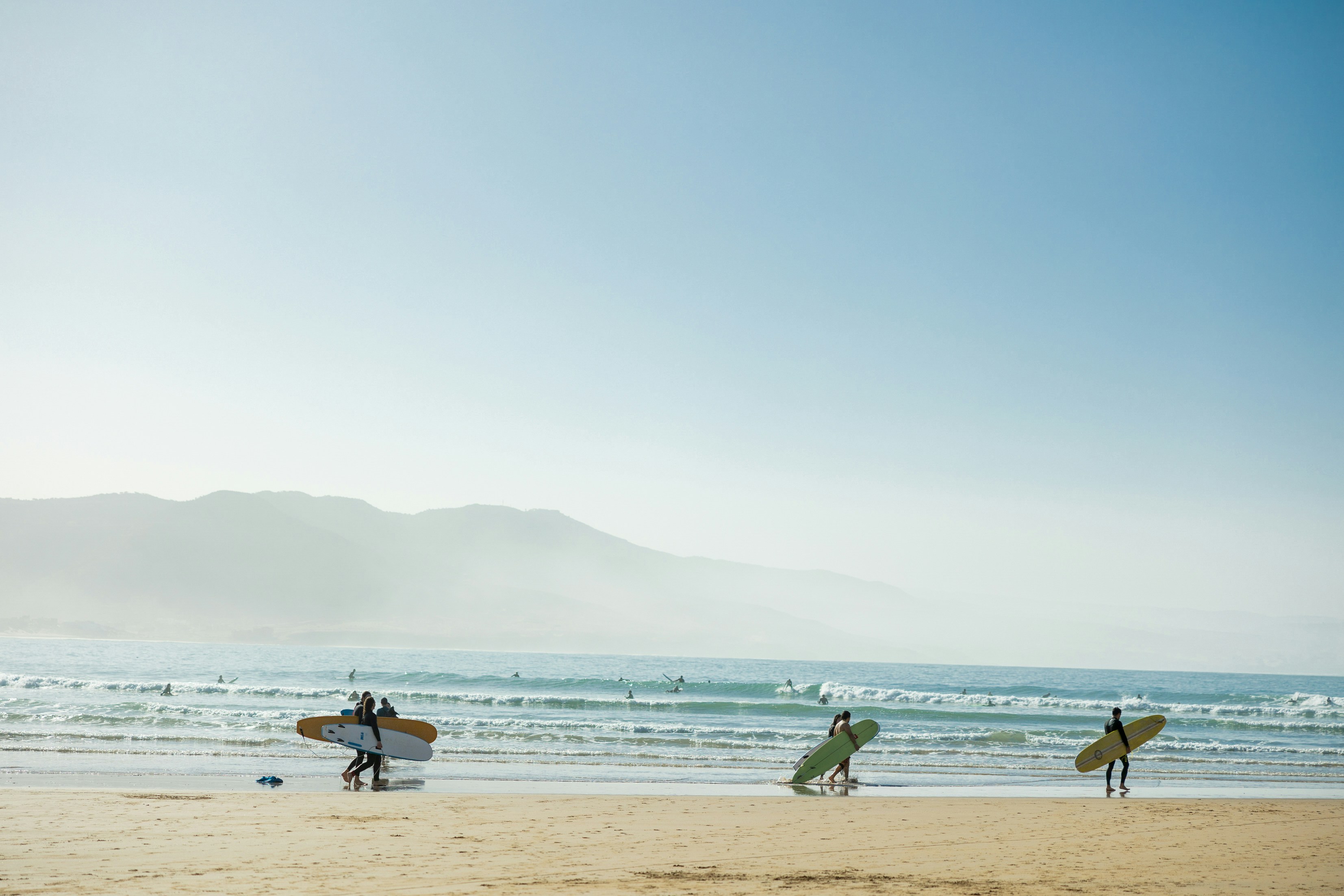
Surfing in Morocco means a long Atlantic coastline with waves for every level. The best time to go is roughly from September or October to March or April, when the swell is consistent. If you are a beginner, summer can also work well, with smaller waves.
The real choice is which region. The long right-hand points that made Morocco famous are mostly for experienced surfers, while the beaches around Rabat, Essaouira, Imsouane and Tamraght are ideal for learning and improving.
Best Time to Surf in Morocco
From autumn to spring, North Atlantic storms push steady northwest swells onto the Moroccan coast. This is high season: the point breaks switch on and the waves have more power. If you are still weighing up destinations, compare with our guide to winter surfing in Europe.
In summer the waves are smaller and the north wind often picks up in the afternoon, especially around Essaouira. That makes it less exciting for experienced surfers, but plenty of beginners do well then, with whitewater and small, easy waves.
The water is around 16 to 18°C in winter and about 22°C in summer. A 3/2 wetsuit works for most people, or a 4/3 if you feel the cold in midwinter (see our wetsuit thickness guide by water temperature).
Morocco Surf Spots by Region and Level
| Region | Type of waves | Suggested level |
|---|---|---|
| Rabat, Mehdia, Bouznika | Beach breaks, some rights along the jetties | Beginners and intermediates |
| Oualidia | Lagoon with gentle waves | Complete beginners |
| Safi | Hollow, powerful right over sand and rock | Experts only |
| Essaouira, Sidi Kaouki | Beach breaks, often windy | Beginners and intermediates |
| Imsouane | Long right in the bay, hollower point across the village | Beginners to advanced, depending on the spot |
| Taghazout and Tamraght | Point breaks and beaches | Beginners to experts, depending on the spot |
| Mirleft | Beach breaks and rights, fewer crowds | Self-sufficient intermediates |
Treat this as a general guide. On the ground, the level a spot demands changes a lot with swell size: an easy spot on a small day can turn dangerous when a big swell arrives.
The North: Rabat, Mehdia and Bouznika
This is the handiest region if you fly into Rabat or Casablanca, and it is often overlooked by visiting surfers.
- Rabat: the beach where the river meets the sea, between two big jetties, is sheltered on both sides. It is often a good option for beginners.
- Mehdia (about 30 km north of Rabat): a long jetty helps northwest swells wrap into long rights, and the beach has lots of peaks for learners. Some reef sections get hollow when it is big, and those are for experienced surfers.
- Bouznika (between Rabat and Casablanca): softer waves than further south, and a great area for beginners and longboarders.
- Oualidia, further south, has a lagoon with small, gentle waves, perfect for your very first sessions.
Safi: Watch It Unless You Are an Expert
Safi is a very hollow right, often named as one of the best waves in the country. It needs a big winter swell to break, it is fast, and it has sections over rock. This wave is for experts only. If you are a beginner or intermediate, stay on the beach when it is firing and enjoy the show.
Essaouira and Sidi Kaouki
Essaouira is best known for its wind, which makes it a big kitesurfing destination. The bay, sheltered by Mogador Island, has a sandy beach break that suits beginners on days when the wind backs off. The town is also a good base for day trips to nearby spots.
Sidi Kaouki, around 30 km south, is a quiet village with open beach breaks. It is a good option for beginners and intermediates, with fewer people than further south.
Imsouane: The Longboarder's Right
Imsouane, a fishing village between Essaouira and Agadir, is famous for The Bay: a very long right that peels for hundreds of metres. On small days it is one of the best places in the country to learn and to longboard. It also stays fairly sheltered when the swell is big elsewhere.
On the other side of the village, Cathedral is a hollower, faster wave over rock. It suits solid intermediates and advanced surfers.
The downside: The Bay gets very busy. With that many surfers sharing one wave, respecting priority is not optional.
Taghazout, Tamraght and the South
North of Agadir, Taghazout is often called the surf capital of Morocco. It has well-known point breaks, including Anchor Point, which are mostly for experienced surfers, and just to the south Tamraght has beaches that are much friendlier for beginners.
Further south, Mirleft mostly draws van travellers looking for fewer crowds. It is a wilder area, better suited to self-sufficient intermediates than to beginners who need a surf school.
Planning Your Morocco Surf Trip
A few tips to make the trip go smoothly:
- Pick your base for your level. As a beginner, choose an area with sandy beaches and surf schools. If you are experienced, go in high season and stay near several point breaks.
- Do not surf alone at a spot you do not know. Foamies can help you find other surfers nearby to share sessions with.
- Ask locally. Spot-specific hazards (currents, rock, sea urchins on some reefs, access) are best explained by local surf schools and surfers.
- Check the forecast for swell, wind and tide every day. Many Moroccan spots work best at a particular tide.
- Protect yourself from the sun, even in winter, and bring booties if you surf over rocky bottoms.
FAQ
When is the best time for a surf trip to Morocco?
For consistent, quality waves, aim for October to March or April. For learning, summer can work too, with smaller waves but often more wind in the afternoon.
Is Morocco good for beginner surfers?
Yes, as long as you choose the right spot. Rabat, Bouznika, Oualidia, Essaouira, Imsouane on small days and the beaches of Tamraght all suit beginners, ideally with a surf school. Avoid the famous point breaks when the swell is big.
Do I need a wetsuit to surf in Morocco?
Yes. The water is around 16 to 18°C in winter, so a 3/2 or 4/3 depending on how much you feel the cold. In summer, a lighter wetsuit is often enough.
Cover photo by Natalia Łączyńska on Unsplash