
How to Read a Surf Forecast: Swell, Period and Wind
Swell height, swell period, wind and tide: a simple way to read a surf forecast in a few minutes and know if the waves suit your level.
To read a surf forecast, check three numbers in this order: swell height, swell period and wind. Height gives you an idea of how big the waves will be, period tells you how much power they will have, and wind tells you whether they will be clean or messy. Add the tide on top and you already know if it is worth loading the board.
How to read a surf forecast: the basic numbers
Most forecast sites and apps show the same information, just laid out differently. For each part of the day you will usually find:
- Swell height, in feet or meters depending on the site (1 m is about 3.3 ft).
- Swell period, in seconds.
- Swell direction, shown as an arrow or in degrees.
- Wind speed and direction, in knots, mph or km/h.
- Tide, with the times of high and low water.
Many sites also add a star rating or a color code. It is handy for a quick look, but that rating comes from an algorithm that has no idea what your level is. A day rated as excellent for an experienced surfer can be far too big for you.
Swell height: what the number really means
The height shown is usually the open ocean swell, not the size of the waves you will see from the sand. Depending on which way the beach faces, the shape of the bottom and the swell direction, waves can come in smaller or a bit bigger than the forecast. A sheltered beach can get much less than an exposed one just a few miles away.
Some rough benchmarks if you are starting out:
- Under 1.5 ft (0.5 m): often too small to glide well, unless you ride a big foam board.
- 1.5 to 3 ft (0.5 to 1 m): the sweet spot to learn to surf in the whitewater (the foam of waves that have already broken) and catch your first green waves, the ones that have not broken yet.
- 3 to 5 ft (1 to 1.5 m): getting serious, especially with a long period. Keep it for days when you feel really comfortable.
- Over 5 ft (1.5 m): generally not beginner territory.
Treat these as a starting point. The same height can produce very different waves depending on the period, and that is where it gets interesting.
Swell period: the most underrated number
Swell period is the time in seconds between two wave crests passing the same point. The longer it is, the farther the swell has traveled and the more energy it carries. A 3 ft swell at 14 seconds hits much harder than a 3 ft swell at 7 seconds. That is often the case with winter swells on the Atlantic (more on that in our guide to winter surfing in Europe).
Here is how to read swell period in practice:
| Period | Type of swell | What it often looks like |
|---|---|---|
| Under 8 s | Wind swell, local chop | Weak, messy, close together waves |
| 8 to 11 s | Medium swell | Decent waves, a good middle ground to progress |
| 12 s and more | Groundswell | Powerful waves, organized sets, stronger currents |
A long period usually means quality waves, but it also means sets (groups of waves that arrive together) bigger than the average and more water moving around. For a beginner, a 3 ft swell at 9 or 10 seconds is often friendlier than a 3 ft swell at 15 seconds, which can catch you off guard with its power.
A useful habit: if the height drops but the period goes up, do not assume it will be small. And the other way around, a big height with a very short period often means a choppy, disorganized ocean.
Wind: offshore, onshore and cross-shore
Wind changes everything about how the waves look. What matters is its direction compared to the beach, and its strength.
- Offshore: blowing from the land out to sea. It holds the waves up and keeps the surface glassy. This is usually what you want, as long as it stays light to moderate.
- Onshore: blowing from the ocean onto the beach. It crumbles the waves and makes the surface bumpy. Fine for whitewater practice, rarely pretty.
- Cross-shore: blowing along the beach. Light cross-shore is often surfable. Strong cross-shore adds chop and pushes you down the beach.
As a rule of thumb, light wind around 0 to 10 knots usually leaves a clean surface. Above 15 to 20 knots, even offshore, things get harder: waves are tough to catch and paddling turns into a workout. Wind is often lighter early in the morning, which is one reason dawn patrol, the first session at sunrise, is so popular.
Watch the units: 10 knots is about 11.5 mph or 18 km/h. Always check which unit your forecast uses.
Swell direction and tide
Swell direction tells you where the waves are coming from. A beach facing due west picks up a west swell well, while a north swell might mostly miss it. That is why two breaks a short drive apart can be completely different on the same day.
Tide matters a lot too. Some breaks only work around mid tide, others get shallow or rocky at low tide. For spot-specific details, ask locally: the surf school or the lifeguards know their beach best.
A real example, step by step
Say tomorrow morning shows: 2.5 ft swell, 10 second period, west-northwest direction, east wind at 5 knots, rising tide mid-morning.
- Height: 2.5 ft, ideal for beginner to intermediate surfers.
- Period: 10 seconds, a clean swell without too much punch.
- Wind: if your beach faces west, an east wind is offshore, and 5 knots is light. Expect a glassy surface.
- Tide: rising, often a good window on beach breaks (waves breaking over sand), but check what works at your spot.
Verdict: a great morning. On the other hand, 6 ft at 14 seconds with 20 knots onshore is a day to watch from the beach while you are learning.
Once you are in the water, get into the habit of noting the conditions of each session. With Foamies you can log your sessions and, over time, see which conditions work best for you at your local break. Comparing what was forecast with what you actually surfed is the fastest way to learn to read the numbers.
Before you paddle out: safety basics
A forecast is still a forecast, and it can be wrong, especially about the wind. A few simple rules:
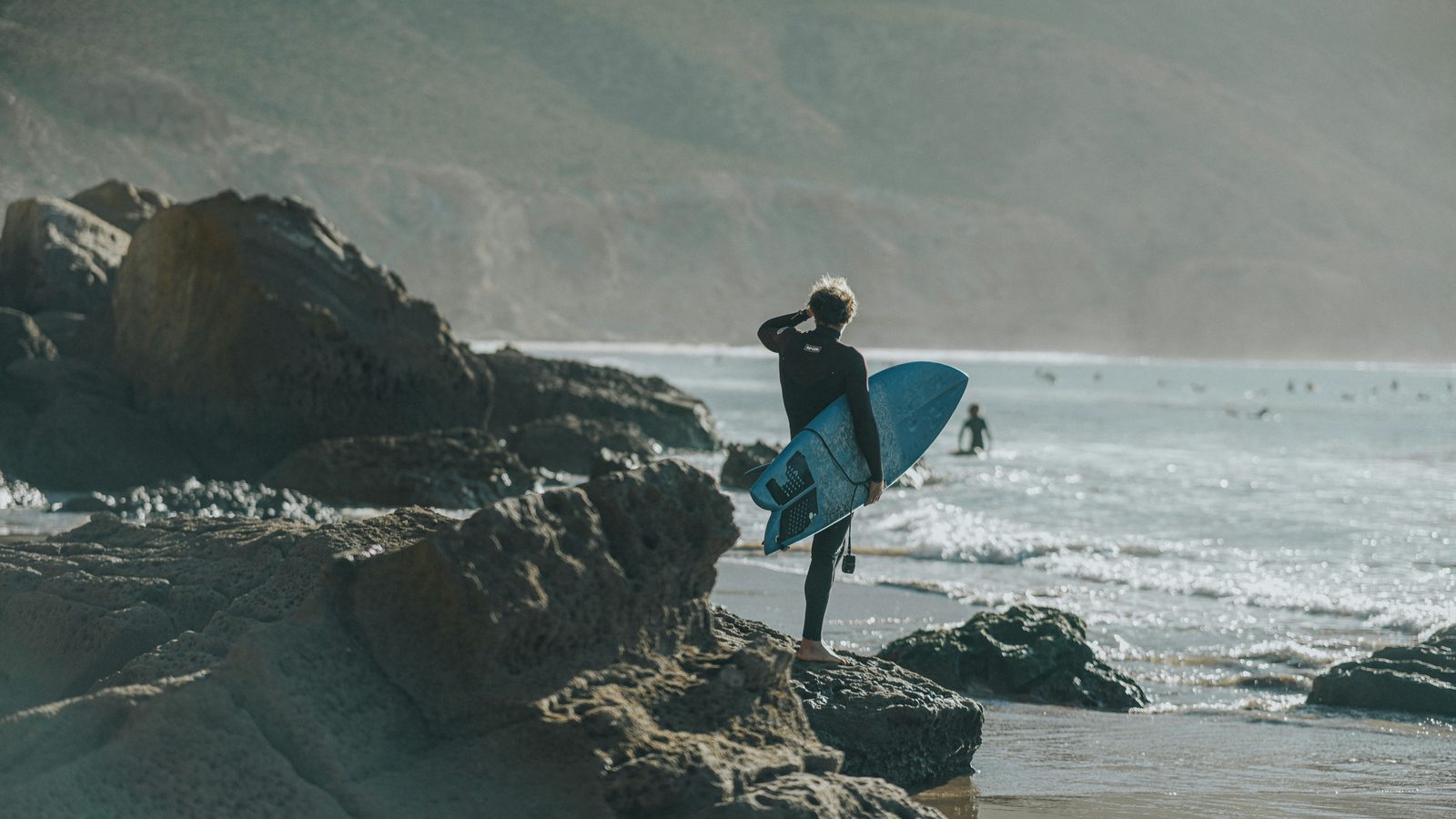
- Watch the ocean for 10 to 15 minutes before going in, to see the size of the sets and spot any rip currents.
- Stay within your level, even if your friends are going out.
- Never surf alone in conditions you do not know.
- Respect right of way and the flagged swimming areas.
- If in doubt, ask the lifeguards or the local surf school.
FAQ
What swell period is best for beginners?
A period around 8 to 11 seconds usually gives regular waves without too much power. Above 12 seconds, sets can be bigger than the forecast suggests. Height and the spot itself matter just as much.
Is offshore wind always good?
When it is light, yes: it grooms the waves and keeps them clean. When it is strong, it makes take-offs (the moment you pop up on the board) hard and can push you out to sea, which is not what you want as a beginner.
Why does the forecast not match what I see at the beach?
The height shown is usually the open ocean swell. The way the beach faces, the bottom and the tide all change the waves by the time they reach shore. With experience, you learn to translate the numbers for your own spot.
Cover photo by Chris Rosiak on Unsplash